
Municipal Data Centre Approval Processes in South Africa
Published by EMFSA | 28 June 2026
Data centre approval processes in South Africa do not have standalone municipal policies.
1. Municipalities like Cape Town, Johannesburg, and Tshwane typically regulate data centres through
- Land-use rezoning or consent-use applications (industrial/business zoning)
- Building plan approvals
- Environmental and noise impact assessments (where triggered)
Broader planning and infrastructure systems in South Africa incorporate data centre approval processes.
2. Data Centre Approval Processes in South Africa and planning frameworks
The available regulatory structure does not include a standalone municipal policy dedicated exclusively to data centres.
Data centre approval processes in South Africa involve:
- Spatial development frameworks (SDFs)
- General zoning schemes
- Infrastructure capacity constraints (power/water)
This reflects a wider African approach where regulators apply general ICT, land-use, and infrastructure frameworks to data centres.
3. Communications infrastructure
Regulators often classify and assess data centres as part of the broader communications and digital infrastructure ecosystem.
Licensing of ICT/network services
In South Africa, regulators like ICASA control parts of the ecosystem:
- Telecommunications and network services require licences and
- Interconnection and infrastructure rules apply to carriers and operators
Telecom frameworks indirectly regulate data centres that host telecom infrastructure or provide connectivity services:
- A hyperscale data centre depends on telecom carriers for connectivity
- Licensing and regulatory obligations apply to telecommunications carriers.
- Spectrum, interconnection, and compliance rules can constrain infrastructure rollout.
Other indirect controls in South Africa
- Water and electricity regulation (critical for cooling and grid capacity)
- Environmental permitting (NEMA processes where applicable)
- National ICT policy direction (cloud/data strategy encouraging migration and infrastructure growth)
Critical infrastructure
Critical infrastructure increasingly includes data centres because they support essential services, government operations, finance, healthcare, communications, and national security.
The South African government has announced plans to designate data centres as critical infrastructure, under the Critical Infrastructure Protection Act however, implementation has not yet occurred.
Telecommunications networks are globally regarded as critical national infrastructure.
Military infrastructure
Data centres owned or operated by the armed forces would be classified as military infrastructure.
Defence bases, weapons systems, command-and-control facilities, and dedicated defence communications networks all fall within military infrastructure.
Key takeaway
- South Africa has no dedicated municipal data centre policy framework
- Approval is handled through standard zoning, infrastructure and environmental processes
- Telecom licensing, grid constraints, and infrastructure law shape data centres
- Datacentres are increasingly recognised as critical infrastructure
References:
South Africa: The National Policy on Data and Cloud – Some highlights https://bowmanslaw.com/insights/south-africa-the-national-policy-on-data-and-cloud-some-highlights/
Legal aspects of data centres in Africa https://www.clydeco.com/en/insights/2026/april/legal-aspects-of-data-centres-in-africa
Why the clouds of secrecy over the impacts of SA data centre growth? (Part 4/5) https://henrynxumalofoundation.co.za/why-the-clouds-of-secrecy-over-the-impacts-of-sa-data-centre-growth/
Data centre ‘critical infrastructure’ tag welcomed, but detail still thin https://techcentral.co.za/data-centre-critical-infrastructure-tag-welcomed-but-detail-still-thin/278229/
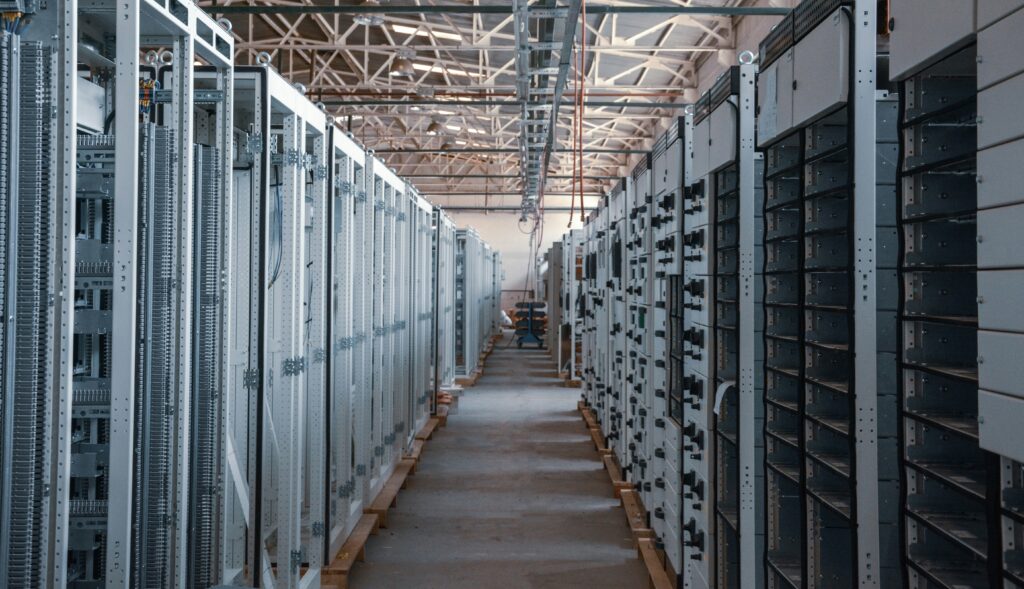
* Photo by İsmail Enes Ayhan on Unsplash