
From Research and Regulation to Corporate and Insurance Risk
Research and regulation are increasingly intersecting with questions surrounding electromagnetic fields (EMF) and radiofrequency (RF) radiation. What happens when questions about scientific evidence and exposure standards extend into regulation, corporate governance, litigation and financial risk?
The September 2026 EMFSA newsletter considers some of those connections.
EMFSA | 29 September 2026
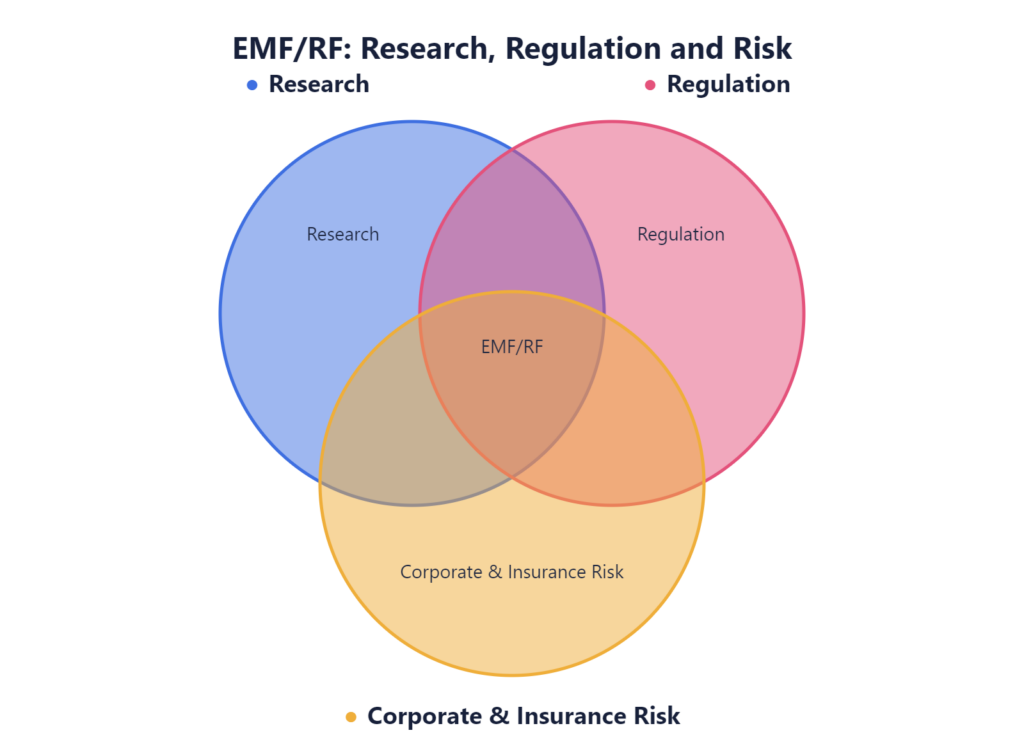
What is changing in the research and regulatory landscape?
Several recent developments in the United States and France are putting renewed attention on radiofrequency radiation and health, but they are taking different forms.
In the United States, federal agencies are seeking public input on questions ranging from the evidence for potential health effects to exposure levels, research gaps and the scientific basis for existing approaches. The FCC proceeding also raises detailed questions about the quality and interpretation of the evidence, including study design, exposure assessment, dosimetry, confounding and the distinction between association and causation.
What questions are being asked about the evidence? What research gaps have been identified? And how might future research inform regulatory discussions?
In France, ANSES is approaching the subject through a call intended to support new research into radiofrequencies and health.
These developments are examined in greater detail in Electromagnetic Fields and Radiofrequency Radiation: U.S. HHS Seeks Public Input; France Calls for New Research.
What does telecommunications infrastructure mean for corporate risk?
Telecommunications networks operate within complex regulatory and commercial environments. Infrastructure and licensing are only part of the picture.
What happens when market access or regulatory decisions involve government officials or politically connected intermediaries? What controls are needed around third-party payments? How can companies manage risks associated with corporate governance, compliance and anti-bribery obligations?
These questions are particularly relevant to telecommunications companies operating across multiple jurisdictions, where local regulatory requirements may intersect with foreign anti-corruption and anti-bribery laws.
Telecommunications Infrastructure and Corporate Risk examines these issues and the broader compliance environment surrounding telecommunications infrastructure.
Who ultimately bears the financial risk?
A different set of questions arises when EMF/RF issues become the subject of litigation.
If a claim continues for years, who pays the cost of defending it? If a company settles a claim or is ultimately found liable, does its insurance respond? What happens when a policy contains exclusions relating to radiation, signal-transmitting equipment or telecommunications infrastructure?
Insurance coverage and legal liability are not necessarily the same question. The wording of an insurance policy can determine whether particular risks are transferred to an insurer or remain with the company.
These issues are explored in EMF/RF Insurance: Who Is Responsible?, which looks at insurance exclusions, defence costs and the potential allocation of financial risk in EMF/RF-related litigation.
Following the connections
Research, regulation, corporate governance, litigation and insurance may appear to be separate subjects. Yet developments in one area can raise questions in another.
For EMFSA, following these connections is part of examining the wider implications of electromagnetic fields and radiofrequency radiation — while keeping the focus on evidence, documented developments and the questions that remain open.
The September 2026 newsletter brings these three strands together, while the individual articles provide a more detailed examination of each subject.